Mudejar Art in Zaragoza: A Fascinating Journey Through San Pablo, La Seo and La Aljafería
Zaragoza It's not just a city; it's a time machine that transports you to an era of astonishing cultural and architectural fusion. History resonates in every corner, but it's in the splendor of Mudéjar art in Zaragoza where this history comes alive with the greatest intensity. This unique style, born from the coexistence of Islamic and Christian traditions, was recognized as a World Heritage Site by UNESCO in Aragon in 1986.
If you're a traveler passionate about heritage, this route will immerse you in the beauty of three unmissable gems: La Seo Cathedral, the Aljafería Palace, and the Church of San Pablo. And while you're planning this cultural immersion, don't forget to discover the exciting experiences that Hotel Europa offers, designed to perfectly complement your visit to the heart of Aragon.
Get ready to discover why Mudejar art in Zaragoza is one of the greatest artistic expressions in Spain.
La Seo: The Cathedral of a Thousand Faces and the Hidden Mudéjar
The Cathedral of the Savior, affectionately known asThe SeoIt is a compendium of almost two millennia of history. Built on the site of the ancient Forum of Caesaraugusta and the Great Mosque of Saraqusta,thisThe metropolitan cathedral stands as a witness to all eras. Its interior will captivate you with an eclectic mix of styles ranging from Romanesque to Neoclassical, housing the imposing High Altarpiece, a masterpiece of 15th-century European Gothic.
But it is on its exterior where we find one of the pinnacles of Mudéjar art in Zaragoza: the exterior wall of the Parish Church of San MiguelBuilt in the 14th century, this wall is a marvel of delicacy. Brick and glazed ceramic intertwine in a complex tapestry of geometric shapes, plant motifs, and interlaced stars that reveal the unparalleled mastery of the Mudéjar artisans. The friezes in shades of green and white not only contribute color, but they symbolize the cultural dialogue and visual harmony of the era.
Attached to the cathedral, the Parroquieta and its wall were declared a World Heritage Site in 2001. The fascinating tower of La Seo, with its symbolic references to the cardinal virtues and sculptures of time, day, the rooster, and night, is a treasure that deserves a close look. Also, don't miss the Tapestry Museum which houses one of the world's most important collections of Flemish tapestries from the 15th to 17th centuries. Immerse yourself in this legacy and understand the historical richness that makes up Mudéjar art in Zaragoza.
The Aljafería: The Mudéjar Magic of a Nasrid Palace in the North
The Aljafería Palace is an architectural marvel and a tangible testament to the sophistication of the Taifa of Zaragoza in the 11th century. Considered, along with the Alhambra and the Mosque-Cathedral of Córdoba, one of the pinnacles of Hispano-Muslim art, it is notable for being the best-preserved and most luxurious Islamic palace located further north in Europe. Originally known as the "Palace of Joy," it was a pleasure estate outside the city walls.
Its history is as rich as its rooms: it has been an Islamic fortress, a Mudéjar palace, a palace of the Catholic Monarchs, the seat of the Tribunal of the Holy Office of the Inquisition, and currently, seat of the Cortes of Aragon This impressive fortress actually houses three palaces in one: the Taifa palace of Al-Muqtadir, the palace of Peter IV, and the palace of the Catholic Monarchs, each adding layers to the complex framework that constitutes Mudejar art in Zaragoza.
The magic lies in its details, especially in the reforms carried out after the Reconquista. The Mudejar Palace, embedded within the Islamic fortress, is proof of the artisans' skill. The Throne Room for example, dazzles with a magnificent coffered ceiling of gilded and polychrome wood. Other secrets await, such as the Mirhab is the private oratory oriented towards Mecca, and the historic Troubadour's Tower, immortalized in Giuseppe Verdi's opera. Mudéjar art in Zaragoza finds one of its most majestic expressions in the Aljafería Palace, and it was declared a World Heritage Site by UNESCO in 2001!
If you're ready to experience Mudejar art in Zaragoza, check availability now and start your tour.
Saint Paul: The Brick Treasury and the Third Cathedral
Continuing our tour of Mudejar art in Zaragoza, we arrive at the Church of St. Paul affectionately nicknamed the "third cathedral of Zaragoza," this church, located in the popular "El Gancho" neighborhood, is a vivid example of local Mudéjar splendor, dating from the 13th century onwards.
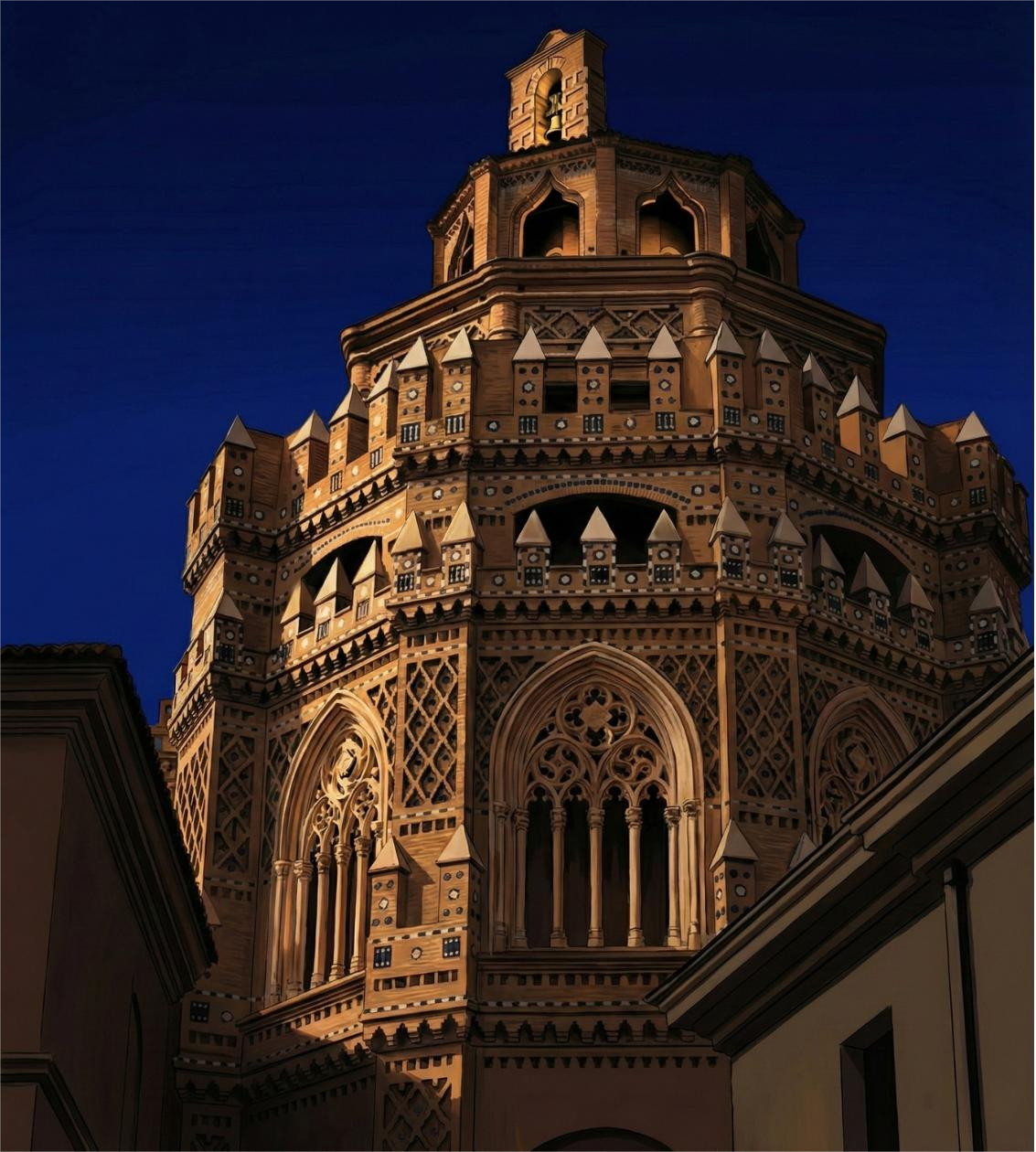
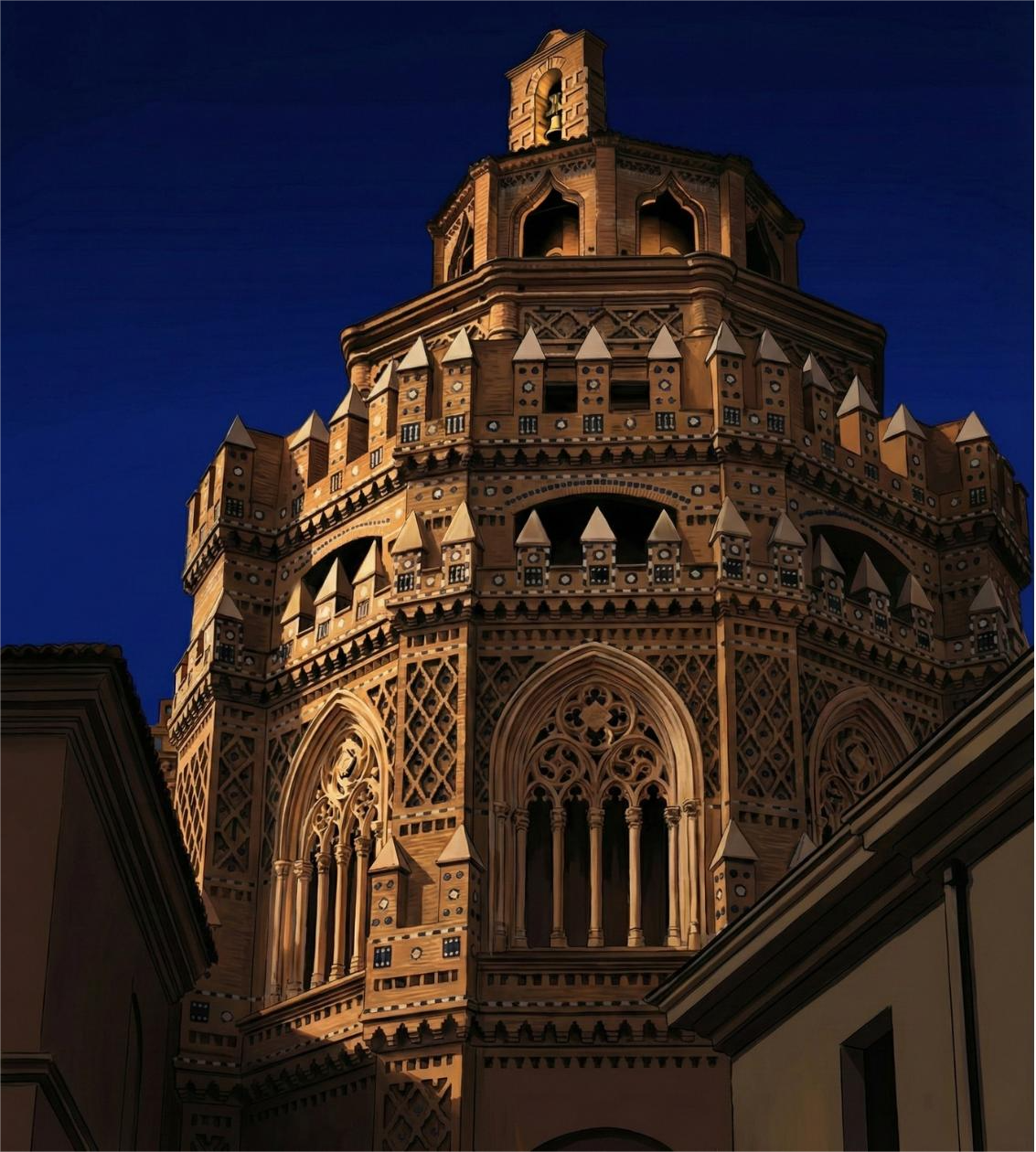
Its most iconic element is the slender octagonal tower, a visual delight decorated with intricate geometric motifs made of brick and glazed ceramic, it demonstrates once again the quality of Mudéjar art in Zaragoza. It is so significant that UNESCO declared the Tower and Church of San Pablo a World Heritage Site in 2001, making it the only architectural ensemble in Zaragoza to be entirely designated as such.
Inside, the church houses the imposing Main Altarpiece by the Renaissance sculptor Damián Forment, a treasure of carved wood that rivals the altarpieces of El Pilar and Huesca. The cloister and the ceramic wainscoting from Muel add even more beauty to the ensemble. More active travelers can climb the 157 steps from its Gothic-Mudejar tower to enjoy the unparalleled views from 66 meters high over the heart of the city.
He Mudejar art in Zaragoza It's not just a style, but a testament to coexistence, innovation, and unparalleled beauty. Every visit to La Seo, La Aljafería, and San Pablo is a lesson in art history. To enhance your experience and allow you to focus on discovering these wonders, our hotel offers the rest and comfort you need. Book your room and enjoy your Zaragoza experience at the Hotel Europa.